The 2nd International Workshop on swarm-like Seismicity
This conference is devoted to the modeling and analysis of earthquake occurrences during swarms. The motivation is to strengthen and foster the scientific relations among communities working on earthquake swarms, and to progress our understanding of the physical mechanisms at play during such sequences, in particular how fluids interact with faulting. We expect contributions on all aspects (theory, case studies, new observational methodologies) and all career levels (young and mature scientists) on the workshop subject.
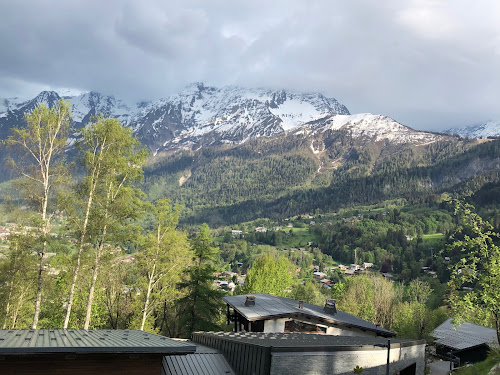
The conference will be held at Ecole des Houches, not far from Chamonix and the Mont Blanc. Attendees are expected to arrive on Sunday the 31st of May, and to depart on Friday the 5th of June after the morning session. There will be morning and afternoon sessions, starting on Monday and finishing on Friday (noon).
The participating fees will be 630 € (fixed rate, possibly subject to minor revision), corresponding to use of the school facilities, lodging, breakfasts + lunches + dinners, and coffee breaks.
Aim of the workshop
Earthquake swarms are clusters of earthquakes that occur close together in both time and space. Unlike typical earthquake sequences where the largest magnitude event occurs first, swarm-like seismicity is characterized by the absence of a dominant mainshock at the beginning of the sequence. Swarm-like seismicity is recorded globally in all tectonically active areas, but it is also typical of seismicity close to volcanoes and accompanies industrial operation related to the exploitation of geo-resources. Foreshock activity as well as more complex seismic sequences characterized by multiple occurrences of large earthquakes are akin and can be associated to a broader definition of swarm-like seismicity.
Swarm-like sequences are dominantly driven by transient forcing, like fluid pressurization and redistribution, aseismic slip, magma migration, slow and fast deformation transients, and injection/withdrawal of fluids in industrial operation. Seismologists and earthquake physicists still struggle to understand the mechanisms at work during such sequences. This hampers our ability to forecast accurately the subsequent spatio-temporal evolution and energy release of these sequences, which in some cases (i.e., anthropogenically stimulated swarms, and also the rare cases of swarm activity precursory to a large, destructive mainshock) is of critical importance. The scope of this workshop is to deepen our understanding of earthquake swarm physics, their occurrences, their natural habitat, and foster a systematic transfer of expertise and techniques for analyzing swarm sequences across disciplines.
The workshop is a follow-up of the 2024 1st Swarm-like Seismicity workshop (held in Castrovillari, Italy, www.swarmlikeseismicity.it), which was the first initiative to foster international collaborative efforts toward the study of earthquake swarms. This workshop attracted 70 scientists from all around the world (mainly Europe, but also Japan, China, USA, Algeria, and Cameroon). We aim to keep a continuing collaboration within this broad community through future projects (in particular by making use of the European Community programs, e.g. doctoral networks). With this workshop at Les Houches, we aim to (1) further promote this burgeoning collaboration, (2) attract early career scientists into the study of earthquakes in relation with fluids and aseismic transients, and (3) pinpoint recent scientific breakthroughs and ongoing developments.
Invited speakers
Provisionnal list: Camilla Cattania (MIT, USA), Pierre Dublanchet (Ecole des Mines, France), François Passelègue (GéoAzur, France), Piero Poli (University of Padova, Italy), Patricia Martinez-Garzon (GFZ, Germany), Leila Mizrahi (ETH Zurich, Switzerland), Zhigang Peng (GeorgiaTech, USA), Yehuda Ben Zion (University of Southern California, USA).
Abstract submission
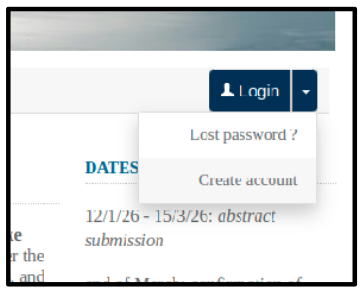
Abstracts can now be submitted. You will first need to create a sciencesconf account by clicking on the "login" button on the top right corner of this page:
Then please submit your abstract by clicking on the My submissions link on the left column (in the MY SPACE panel).
We will close submissions in early March. We will confirm acceptance or not of the participation hopefully at the end of March.
Organization committee
David Marsan (Université de Savoie Mont Blanc, France), Blandine Gardonio (CNRS, France), Louis de Barros (Géoazur, France), Luigi Passarelli (INGV, Italy), Philippe Danré (Université de Strasbourg, France).
Scientific committee
D. Marsan, B. Gardonio, L. de Barros, L. Passarelli, P. Danré, Kate Huihsuan Chen (National Taiwan Normal University), Yen Joe Tan (Chinese University of Hong Kong), Yihe Huang (University of Michigan), Olivier Lengliné (Université de Strasbourg), Julie Maury (BRGM Orléans), Kristine Pankow (University of Utah).
 Loading...